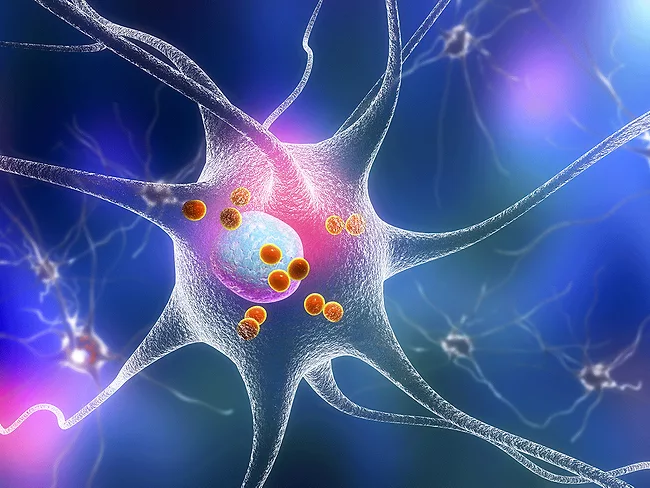
AC Immune SA plans talks with regulators based on positive interim safety and efficacy results from the phase II Vacsyn trial of its wholly owned anti-alpha-synuclein (a-syn) active immunotherapy ACI-7104.056 in early Parkinson’s disease (PD). The firm said that for the first time, data support targeting a-syn pathology via such a strategy. Disease-related biomarker results that suggest PD slowing include a-syn cerebrospinal fluid (CSF) levels and neurofilament light (NfL).
LRRK2 plays a key role in the biology of multiple neurodegenerative disorders, including Parkinson’s disease (PD) and progressive supranuclear palsy (PSP), where mutations or altered activity are associated with impaired cellular signaling and neuronal decline.
Brenig Therapeutics Inc. has described leucine-rich repeat kinase 2 (LRRK2; dardarin) and (LRRK2; dardarin) (G2019S mutant) inhibitors reported to be useful for the treatment of Parkinson’s disease, among others.
Scineuro Pharmaceuticals Holdings Ltd. has received a $5 million research grant from The Michael J. Fox Foundation for Parkinson’s Research (MJFF) to accelerate the preclinical development of the company’s novel LRRK2-targeted antisense oligonucleotide (ASO) program, SNP-614, for Parkinson’s disease.
Brainxell Inc. has reported preclinical data demonstrating efficacy of BXT-110, an autologous induced pluripotent stem cell (iPSC)-derived neuronal therapy for Parkinson’s disease.
The largest study ever conducted on light therapy for Parkinson’s disease has found that long-term use of Symbyx Biome Pty Ltd.’s non-invasive, at-home photobiomodulation (PBM) devices significantly improved mobility, anxiety, and overall symptom severity.
Inhibiting human monoamine oxidase (MAO)-B to increase the availability of monoamine neurotransmitters is a clinically approved strategy for treating Parkinson’s disease, yet available inhibitors lack efficacy or increase risk of adverse events. Researchers at Hefei University of Technology and collaborators started from the clinically improved MAO-B inhibitor safinamide and generated various derivatives, among which [I] and [II] emerged as the most promising.
Researchers at Shanghai Jingxin Biopharmaceutical Co. Ltd. and Zhejiang Jingxin Pharmaceutical Co. Ltd. have divulged compounds acting as leucine-rich repeat kinase 2 (LRRK2; dardarin) inhibitors reported to be useful for the treatment of Parkinson’s disease.
Inhibiting histone deacetylase 6 (HDAC6) has therapeutic potential against several neurodegenerative disorders. A collaboration including researchers from Eikonizo Therapeutics Inc., spanning the U.K., U.S. and France, developed EKZ-438, which has shown strong potential against amyotrophic lateral sclerosis and frontotemporal dementia in preclinical studies.