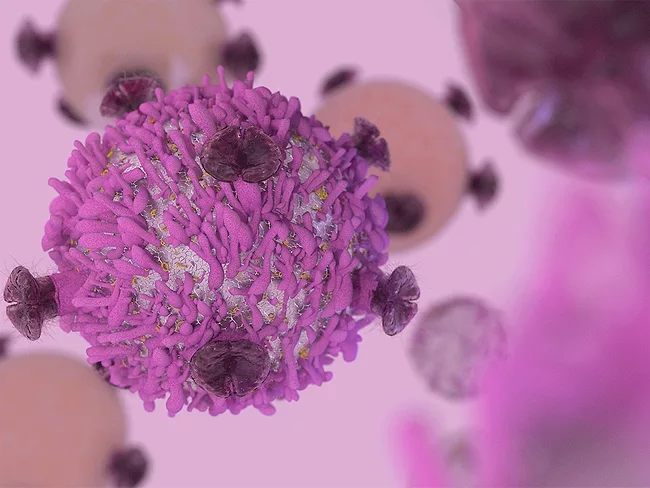
Increasing knowledge of the cancer glycome and the need for new options to overcome resistance to immune checkpoint inhibitors are leading to an expansion of glycoimmunology. Stanford University professor Carolyn Bertozzi demonstrated that cell-surface glycans may be tagged to become targetable glyco-immune checkpoints.
The 2022 Nobel Prize in chemistry was awarded to Carolyn Bertozzi of Stanford University, to Morten Meldal of the University of Copenhagen, and – for the second time – to Barry Sharpless of The Scripps Research Institute “for the development of click chemistry and bioorthogonal
chemistry.”
Click chemistry, the Nobel Committee’s Olof Ramström told reporters while announcing the prize, “is almost like it sounds – it’s all about linking different molecules.”
He likened click chemistry to a seatbelt buckle, whose interlocking parts can be attached to many different materials, linking them by snapping the two parts of the buckle together.
“The problem was to find good chemical buckles,” Ramström said – chemicals that “will easily snap together, and importantly, they won’t snap with anything else.”
Shanghai Henlius Biotech Inc. has inked a deal to acquire greater China rights for two cancer-focused bifunctional sialidase programs from Palleon Pharmaceuticals Inc. In return, Palleon will receive an unspecified up-front payment and is eligible for up to $196.5 million in milestone payments.
Shanghai Henlius Biotech Inc. has inked a deal to acquire greater China rights for two cancer-focused bifunctional sialidase programs from Palleon Pharmaceuticals Inc. In return, Palleon will receive an unspecified up-front payment and is eligible for up to $196.5 million in milestone payments.
Palleon Pharmaceuticals Inc. CEO and founder Jim Broderick told BioWorld that the just-raised $100 million in series B money leaves the firm well positioned to push its lead oncology compound into the clinic next year, bolstered by a widely gathered team of experts – “almost a consortium” – in glycan mediation.